How Much Does Assisted Living Cost Per Month in 2026?

How much does assisted living cost per month? The national average is about $5,830 in 2026. Many families pay between $4,000 and $8,000, but the bill depends on location, apartment size, and how much help a resident needs. A quoted base rate may not include every care service or a one-time move-in fee.
If that price feels out of reach, start by asking each community for a written breakdown of costs. Then check whether long-term care insurance, veterans benefits, or a state Medicaid program could help pay for care. Medicaid rules vary by state and generally do not cover room and board.
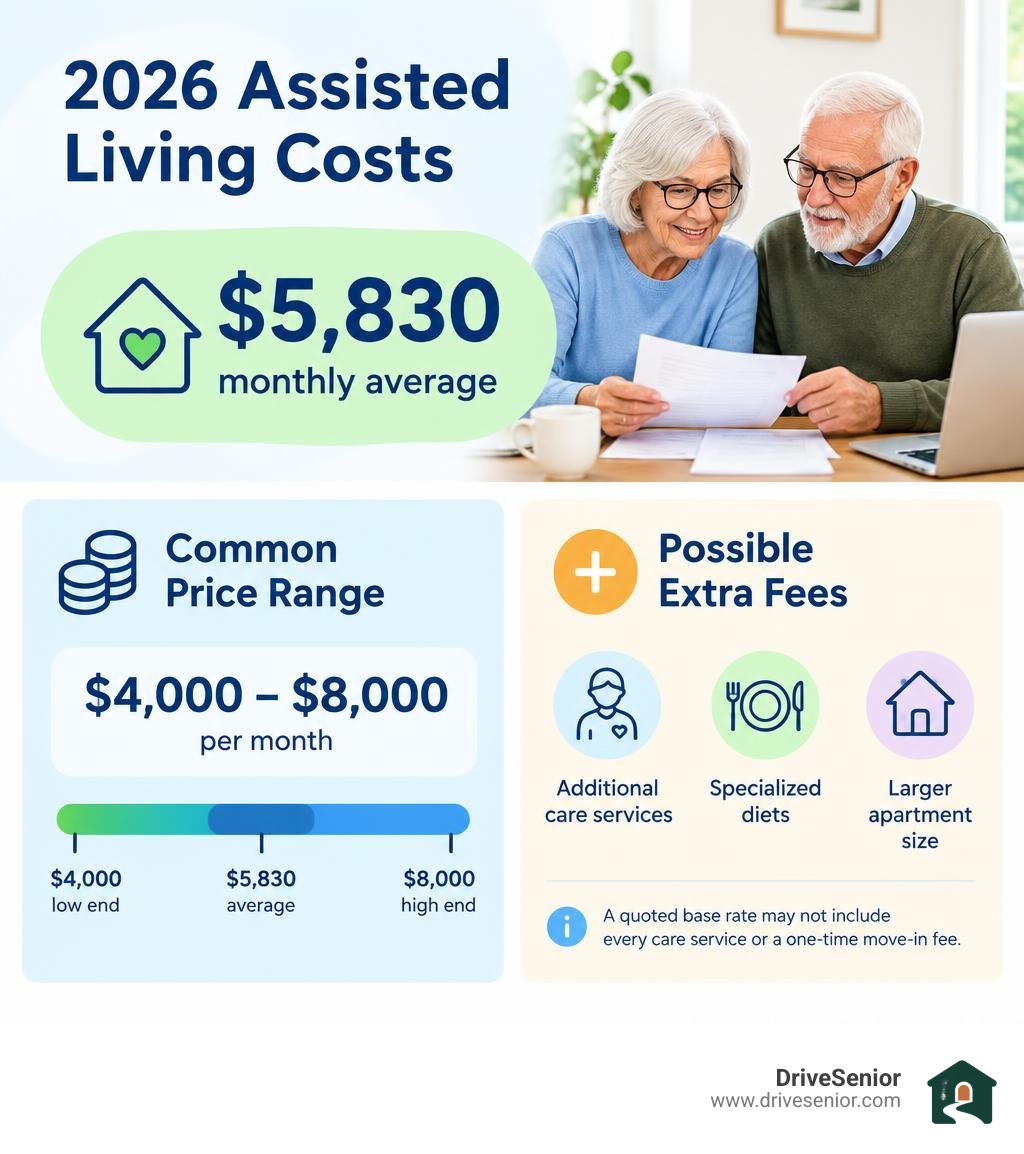
How Much Does Assisted Living Cost Per Month Across the U.S.?
When budgeting for senior care, geography plays one of the largest roles in determining your bottom line. Nationally, the median cost of assisted living in 2026 sits near $6,313 per month (or roughly $75,756 per year), with the national average baseline landing at $5,830. However, depending on local real estate values, labor markets, and state-level regulations, monthly expenses fluctuate dramatically from coast to coast.
In recent years, industry fee adjustments have reflected broader economic pressures. According to a Senior Housing News report on senior care inflation, resident fees surged by 10% in a single year as communities adjusted to rising culinary, utility, and healthcare staff wages. Across the country, providers typically raise rates by roughly 4% to 6% annually to keep up with these operational overheads.
| State / Region | Average Monthly Cost (2026) | Typical Monthly Range |
|---|---|---|
| National Baseline | $5,830 | $4,000 – $8,000 |
| Hawaii (Highest) | $12,000 | $10,500 – $14,000 |
| Washington, D.C. | $7,956 | $6,800 – $9,500 |
| New York | $6,817 | $5,200 – $8,900 |
| Florida | $4,850 | $3,900 – $6,400 |
| Georgia | $4,120 | $3,800 – $5,500 |
| Mississippi (Lowest) | $4,715 | $3,500 – $5,200 |
2026 National Benchmarks and Regional Price Differences
The disparity between high-cost and low-cost states highlights why choosing a location is a major strategic decision for families. Hawaii remains the most expensive state for assisted living at an average of $12,000 per month, whereas Mississippi offers some of the lowest average rates nationwide at $4,715 per month. Even within specific states, regional differences create notable pricing spreads. In Georgia, for instance, rural areas and smaller towns average closer to $3,800 to $4,200 per month, while the Atlanta metropolitan area frequently reaches $4,500 to $6,500.
Urban settings and coastal resort destinations command higher rent due to local land values and staffing competition. In contrast, inner-ring suburbs and rural communities often offer rates 10% to 20% below the national median. When you start your search to find a community, looking just 15 to 30 miles outside a major city center can save hundreds of dollars each month without compromising clinical support or hospitality quality.
Fee Models: All-Inclusive vs. Tiered and A La Carte Structures
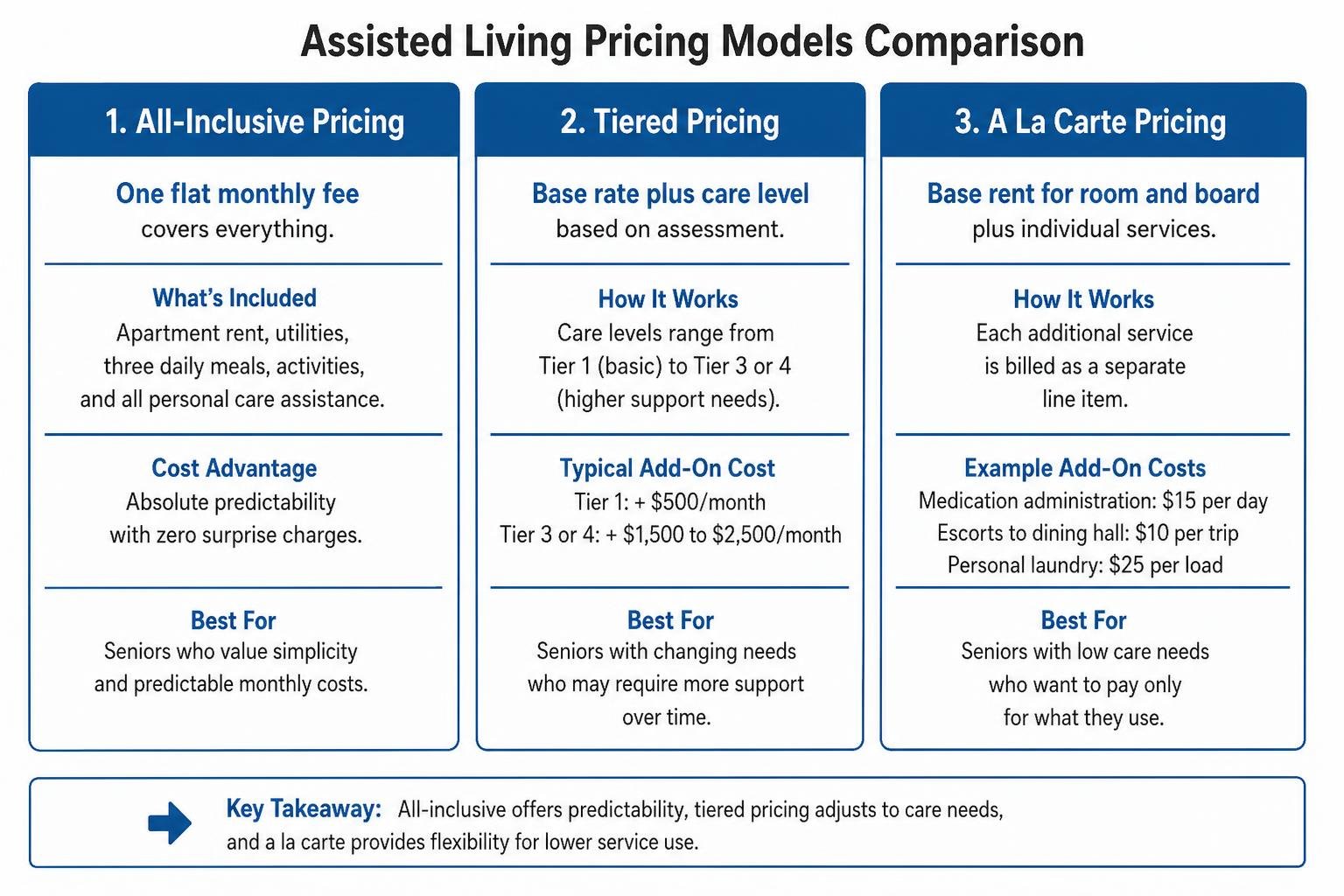
To understand what you will actually pay each month, it helps to examine how the facility structures its billing. Communities generally rely on one of three pricing models:
- All-Inclusive Pricing: One flat monthly fee covers apartment rent, utilities, three daily meals, activities, and all personal care assistance. While the monthly sticker price appears higher initially, it offers absolute predictability with zero surprise charges at the end of the billing cycle.
- Tiered Pricing: The community divides personal support into three to five distinct care levels based on an initial nurse assessment. A resident requiring basic assistance with medication reminders might start in Tier 1 (an extra $500/month), whereas someone needing physical transfers and dressing help might move to Tier 3 or 4 (an extra $1,500 to $2,500/month).
- A La Carte Pricing: Residents pay a foundational base rent for room and board, and every extra service is billed as an individual line item. Medication administration might cost $15 per day, escorts to the dining hall $10 per trip, and personal laundry $25 per load. While budget-conscious seniors with low care needs can save money under this model, costs can skyrocket unpredictably following a minor injury or sudden change in health.
Understanding the Core Components of Senior Care Expenses
Assisted living is a hybrid model combining residential real estate, hospitality, and personalized healthcare. When you look at an itemized breakdown, your monthly payment covers physical housing alongside daily living support designed to maintain independence.

Key Factors Determining How Much Assisted Living Costs Per Month
The total amount on your monthly invoice reflects several distinct variables:
- Apartment Size and Layout: Living in a shared companion suite is the most economical choice, while a private studio represents the median baseline. Upgrading to a one-bedroom or two-bedroom apartment with a kitchenette will add $800 to $2,000 or more to the baseline housing cost.
- Level of Care: Dedicated care staff assess how much physical assistance a resident requires for Activities of Daily Living (ADLs)—including bathing, grooming, dressing, eating, and mobility. Most communities charge a level-of-care fee ranging from $500 to $2,500 per month on top of the base rent.
- Staffing Ratios: Communities that maintain higher caregiver-to-resident ratios, provide round-the-clock licensed nurses on-site, or offer specialized physical therapy coordination command higher monthly premiums.
- Specialized Lifestyle Amenities: Modern campuses with restaurant-style dining, heated therapy pools, on-site beauty salons, fitness centers, and chauffeur-driven transportation charge higher base rents than traditional, modest facilities.
To get a better sense of how personalized care bundles and modern residential amenities work together, explore how tailored assisted living environments are built around daily dignity and wellness.
Standard Inclusions vs. Move-In Fees and Ancillary Charges
Before signing a residency agreement, you must separate baseline package inclusions from one-time and ongoing ancillary charges:
- Standard Monthly Inclusions: Typically covers private or semi-private housing, all utilities (water, electricity, heating, trash removal), three nutritious meals daily, weekly housekeeping, linen service, scheduled medical transportation, daily life-enrichment programming, and 24-hour emergency response call pendants.
- One-Time Move-In / Community Fees: Almost every facility charges an upfront, non-refundable community fee upon admission. The national median move-in fee is about $3,000 (generally ranging from $1,500 to $5,000), which covers initial administrative processing, apartment refurbishment, and personalized care plan setup.
- Second-Person Fees: If a married couple shares an apartment where one or both need assistance, the community assesses a second-person fee. The national median second-person fee is about $1,200 per month to cover additional dining, utilities, and housekeeping.
- Ancillary Surcharges: Common add-on expenses include monthly pet rent ($50–$100), private high-speed internet and premium cable packages, reserved covered parking, guest meals, salon services, and incontinent supply disposal fees.
Comparing Care Alternatives and Monthly Budgets
Families often ask whether moving to a community makes more financial sense than bringing aides into the family home. When comparing long-term care alternatives, you must factor in the full cost of living—including home maintenance, property taxes, food, utilities, and continuous safety supervision.
| Care Setting | Average Monthly Cost (2026) | Primary Inclusions | Best Suited For |
|---|---|---|---|
| Independent Living | $3,500 – $4,200 | Housing, meals, maintenance, social activities (no ADL care) | Seniors who are fully mobile and need no daily medical or personal care |
| Home Care (44 hrs/week) | $6,096 – $6,673 | Hourly personal care at home ($32–$35/hr) plus standard household bills | Seniors with low to moderate care needs who own a fully accessible home |
| Assisted Living | $5,830 | Housing, 3 meals/day, utilities, activities, 24/7 staff, ADL help | Seniors needing help with 1 to 3 ADLs and seeking social engagement |
| Memory Care | $6,800 – $7,350 | Secure housing, specialized dementia programming, higher staff ratios | Individuals with Alzheimer's disease or advanced cognitive decline |
| Nursing Home (Private) | $9,581 – $10,798 | 24/7 skilled nursing, intensive medical care, full personal assistance | Seniors with severe chronic clinical conditions or high medical frailty |
Evaluating How Much Assisted Living Costs Per Month vs. Home Care and Nursing Facilities
At an average non-medical caregiver rate of $32 to $35 per hour, hiring private home care for 44 hours a week costs approximately $6,096 to $6,673 per month. When you add mortgage or rent payments, groceries, property maintenance, and utility bills, staying at home with full-time help often exceeds the cost of a residential assisted living suite. Assisted living creates natural cost efficiency by pooling culinary staff, housekeeping, and round-the-clock aides across an entire neighborhood of residents.
Conversely, skilled nursing facilities cost nearly double what assisted living charges, averaging $9,581 for a semi-private room to $10,798 per month for a private suite. Nursing homes provide intensive, hospital-level medical management, wound care, and daily physical therapy overseen by registered nurses. If a senior only requires assistance with basic personal routines like bathing and medication reminders, paying for a skilled nursing bed is an unnecessary expense.
The broader pressure on care settings is growing as demographic shifts accelerate. As highlighted in a New York Times analysis on long-term care demand, the oldest baby boomers are rapidly reaching their 80s, driving an unprecedented surge in demand for supportive care that makes proactive financial planning vital for every household.
Transitions Across the Senior Living Continuum
Care needs rarely stay static over time. The median length of stay in an assisted living community is 22 months, resulting in an average total investment of $128,260 at the national baseline of $5,830 per month. Understanding where assisted living sits along the broader continuum ensures families budget appropriately for future transitions:
- From Independent Living to Assisted Living: Assisted living costs roughly 65% more than independent living, primarily because independent living covers only hospitality and housing without direct caregiver support.
- From Assisted Living to Memory Care: If a loved one develops progressive cognitive impairment, transitioning to a dedicated memory care neighborhood typically adds $1,000 to $1,500 per month on top of standard assisted living rates. This surcharge funds specialized architectural security (such as secured courtyards and wander-management systems), structured sensory programming, and specialized dementia-care training for staff.
Low-Income Payment Programs, Benefits, and Financial Strategies
Approximately 70% of residents initially pay for their senior living expenses out of pocket using personal savings, pensions, and Social Security income. However, for low-to-moderate-income older adults, funding long-term care requires a strategic blend of public benefit programs and private asset tools.

Public Assistance: Medicaid Waivers and Veterans Aid
Public support programs can provide critical relief, though each comes with strict eligibility boundaries:
- Medicaid HCBS Waivers: Traditional Medicaid does not cover room and board in assisted living communities. However, as documented in an NCAL White Paper on Affordable Assisted Living, roughly 48% of assisted living communities participate in state Medicaid Home and Community-Based Services (HCBS) waiver programs. These waivers reimburse the facility for personal care services, nursing oversight, and medication management for income-qualified seniors (about 17% of all residents rely on Medicaid support). Families must still find a way to fund the room and board portion.
- VA Aid and Attendance Pension: Qualified wartime veterans and their surviving spouses who require help with daily living activities can access significant monthly, tax-free pension enhancements. Eligible single veterans can receive up to approximately $2,300 per month, veterans with a dependent spouse can receive up to $2,700 per month, and surviving spouses can access up to $1,450 per month to help offset monthly assisted living fees.
Private Funding: Home Equity, Long-Term Care Insurance, and Life Conversions
When personal monthly income falls short of monthly fees, families can unlock existing assets:
- Leveraging Residential Real Estate: For most seniors, their primary home represents their largest financial asset. Selling a home can generate several hundred thousand dollars in liquid capital, funding multiple years of assisted living expenses. Alternatively, families who need immediate occupancy while preparing a house for market can use short-term senior care bridge loans or home equity lines of credit (HELOCs).
- Long-Term Care Insurance (LTCI): Traditional or hybrid LTCI policies kick in once a doctor certifies that a policyholder cannot perform two or more ADLs. These policies pay out a daily or monthly indemnity benefit (often $150 to $300 per day) directly toward approved residential care.
- Life Insurance Conversions & Settlements: Seniors holding permanent life insurance policies with accumulated cash value can convert their policies into pre-funded long-term care benefit accounts or sell unneeded policies through life settlements, typically yielding 20% to 30% of the death benefit value in immediate cash.
- Tax Deductions: Under IRS guidelines, the medical care portion of assisted living fees—and in some cases the entire monthly fee if a physician certifies an individual as chronically ill—may qualify as deductible medical expenses, reducing annual tax burdens.
To dive deeper into financial options and family decision-making frameworks, explore our library of educational senior resources.
Frequently Asked Questions About Assisted Living Expenses
Does Medicare pay for assisted living room and board?
No. Medicare is federal health insurance designed for acute medical events, doctor visits, hospitalizations, and short-term rehabilitative stays in skilled nursing centers (up to 100 days following a qualifying hospital stay). Medicare never pays for ongoing custodial room, board, or basic personal care assistance in assisted living facilities.
What happens when personal funds run out in assisted living?
When a resident exhausts their private savings (a process known as "spending down"), what happens next depends entirely on the community's policies. Some communities require residents to pay privately for a mandatory minimum period (often 18 to 24 months) before allowing them to transition to a Medicaid waiver slot. If a facility does not participate in Medicaid HCBS programs or lacks available waiver beds, the resident will need to relocate to a Medicaid-certified community or skilled nursing center. It is essential to discuss spend-down policies with the executive director before signing an initial lease.
How much do assisted living rates increase annually?
Assisted living rates typically increase by 4% to 6% each year (averaging around 5% over long-term historical trends). These annual price adjustments cover escalating operational costs, including culinary food supplies, property insurance, commercial utilities, and competitive healthcare wage increases. Communities generally issue written notice 30 to 60 days prior to applying rate adjustments.
Conclusion
Understanding long-term care costs doesn't have to feel overwhelming. While the national average of $5,830 per month represents a significant financial commitment, knowing how pricing tiers work, which services are bundled, and what public and private funding resources exist puts you firmly in control of your family's budget.
For many older adults, transitioning into senior living involves unlocking the equity tied up in their family home. At DriveSenior, we provide dedicated real estate services designed to help seniors and their families sell, buy, or invest in property with complete peace of mind. We combine comprehensive market expertise with compassionate, step-by-step guidance to make moving into your next chapter exciting rather than stressful. Connect with our team for DriveSenior real estate guidance for senior transitions and let us help you turn your home equity into a secure, comfortable future.